Should the Global South Adopt Global North Standards and Goals in the Name of Development?

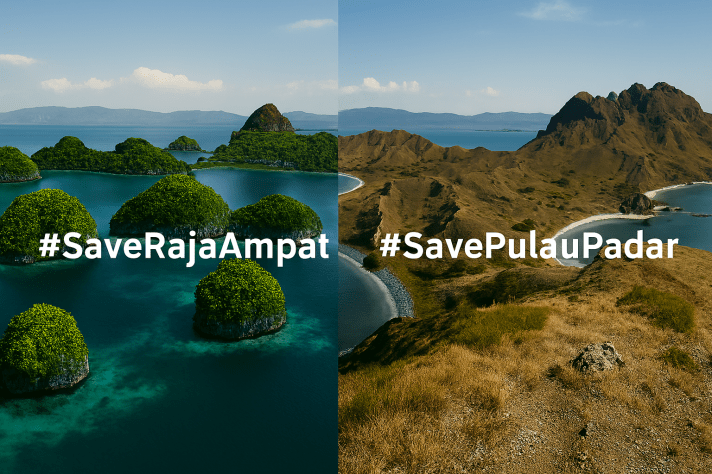
AI-generated picture

From #SaveRajaAmpat to #SavePulauPadar

Month after month, year after year, Indonesia’s netizens find themselves fighting to protect their own “heaven on earth”. Not long ago, the hashtag #SaveRajaAmpat went viral. Raja Ampat, located in the eastern province of Papua, is renowned for its pristine natural beauty, blue waters, untouched coral reefs, and hundreds of small islands. But even this ecological treasure isn’t safe. The culprit? Nickel mining, specifically on Gag Island.

Nickel has become a highly sought-after resource, particularly with the rapid growth of electric vehicles. The world’s push for green energy, while well-intentioned, has ironically fuelled environmentally destructive practices in the Global South. Countries in the Global North enjoy sleek, battery-powered cars, often unaware or uninterested that the nickel powering their green lifestyle is extracted at the cost of ecosystems and communities thousands of miles away. As someone from Indonesia currently living in a country that prides itself on green innovation, I feel a deep sense of unease knowing Indonesia pays the price for that convenience.

Today, a new hashtag popped up on my Instagram feed: #SavePulauPadar.

Pulau Padar is situated between the Komodo and Rinca islands, within the Komodo National Park, a UNESCO World Heritage site. This region is globally celebrated for its stunning landscapes and, of course, its legendary Komodo dragons. But now, Pulau Padar is under threat. The Indonesian government has granted a 274-hectare concession to a company called PT Komodo Wildlife Ecotourism (KWE), which plans to build a staggering 619 structures, including 448 swimming pools, 15 cafés, 7 spa facilities, and various other developments.

For whom is this “eco-tourism” development intended? Mostly, the wealthy, especially international tourists from the Global North. These projects often cater to global luxury standards, offering the comforts of home in an exotic setting, all while displacing the very communities that call these islands home. Indigenous people whose lifestyles and needs are often disregarded now face the possibility of forced relocation in favour of luxury resorts.

It begs the question: why must international tourists and rich people expect their own standards of living wherever they go? Isn’t the essence of travel rooted in experiencing different cultures, ways of life, and environments? Why can’t they adapt to the local standard?

Unfortunately, this is a pattern we have seen time and time again. In our relentless pursuit of “development”, we equate progress with imitation, copying the lifestyles, infrastructures, and economies of wealthier nations. But at what cost? When we build for others while displacing our own people, when we destroy what makes a place special to make it more palatable, are we really developing or just giving up what matters most?

Development must be redefined.
It should not mean sacrificing local identity for international approval, nor should it mean choosing short-term profit over long-term sustainability. True development uplifts communities, preserves nature, and respects the balance between people and place. (Meta Mulyani)
Authenticity in North-South Collaborations for Climate Action

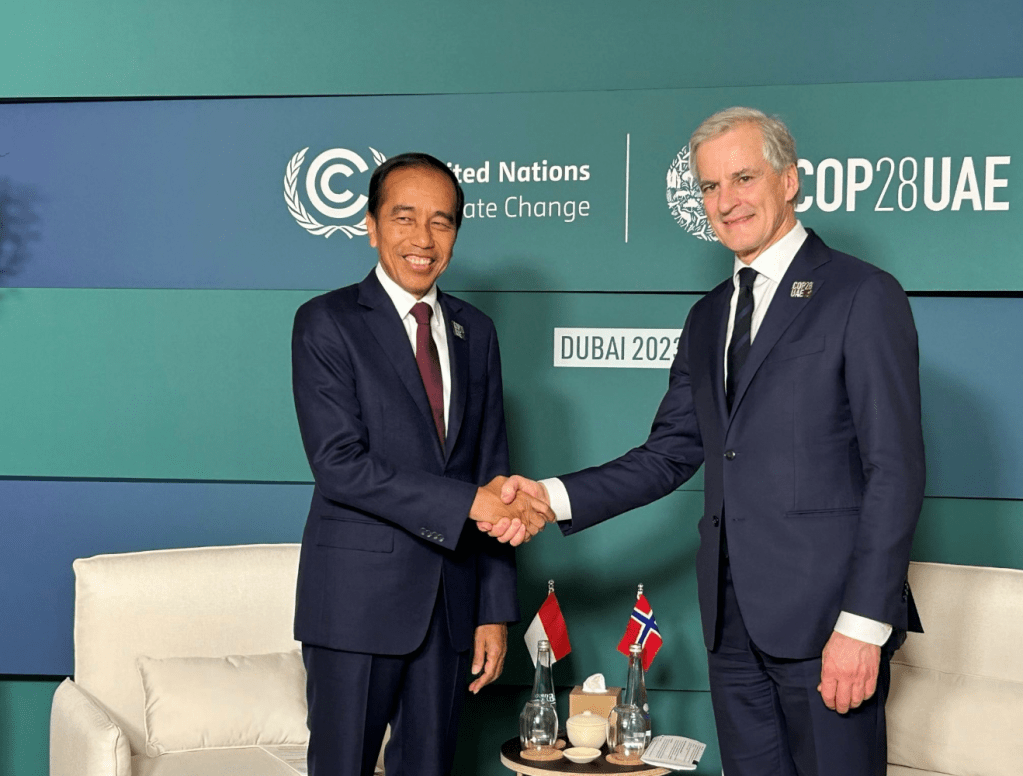
Indonesian President Joko Widodo and Norwegian Prime Minister Jonas Gahr Støre shake hands during an event at COP28, emphasizing international climate cooperation (NICFI, 2023)

Climate change is one of the most significant challenges facing our world today and presents the single biggest threat to sustainable development everywhere. The Sustainable Development Goals (SDGs), adopted by all United Nations (UN) member states in 2015, provide a comprehensive framework to address these challenges and promote a sustainable future for all. Among these goals, Goal 13: Climate Action is crucial in the fight against climate change.

The SDGs have faced significant criticism because numerous programs have fallen off track. The SDGs Report 2024 showed that only 17 per cent of the SDG targets are currently on track, with nearly half showing minimal or moderate progress and over one-third stalled or regressing.

Some critics pointed out that the goals are too broad and ambitious, making it difficult to focus on specific, actionable goals and leading to inefficiencies in efforts and resources. Other critics emphasise trade-offs and conflicts between different SDGs. For instance, aiming for at least 7 percent annual GDP growth in the least developed countries (SDG 8.1) might hinder progress on climate action (SDG 13) due to increased industrialisation and pollution. Some radical critiques highlight the close alignment between the Sustainable Development Goals (SDGs) and corporate capitalism or neoliberalism, suggesting that these frameworks may prioritise profit over authentic sustainable development.

In this post, I focus on one key issue: how climate partnerships between the Global North (wealthier countries) and the Global South (poorer and developing countries) are often unequal. SDG 17 encourages global partnerships, including those focused on climate action, but many of these partnerships are unbalanced.

One problem is that countries from the Global South are often underrepresented in international climate negotiations and decision-making processes. Important decisions are made in forums like the United Nations Framework Convention on Climate Change (UNFCCC), where richer countries often have large, well-prepared teams. These delegations are usually English-speaking, have legal and scientific experts, and can send the same people to each meeting. Many Global South countries do not have the resources to build such teams, which limits their influence and leads to unfair outcomes. In response, they often have to come up with creative ways to make their voices heard, but the system still favours wealthier nations.

Partnerships between the Global North and South in addressing climate change are often shaped by a combination of genuine environmental concerns and strategic interests. Among the underlying motives are economic considerations: Northern countries may aim to secure access to resources and emerging markets in the Global South. Supporting climate initiatives can serve not only environmental goals but also the cultivation of goodwill and the strengthening of economic relationships.

Some critics mentioned that the partnership was a new form of colonialism and a neoliberal environmental approach. For example, the Indonesia-Norway REDD+ project mitigates climate change by halting deforestation, considering the important role of absorbing and storing carbon dioxide. Svarstad and Benjaminsen argued that the partnership is a new form of colonialism that allows Norway to continue its dependence on oil while pushing carbon emission reduction to others. Alled William, in his book The Politics of Deforestation and REDD+ in Indonesia, viewed REDD+ as a neoliberal environmental approach to the global climate crisis. Norway is one of four major OECD oil producers that use oil wealth generated in one country to pay for carbon emission reduction from deforestation in another. He added that the partnership can be cast as a form of neocolonialism that uses economic and political pressure to control and influence another poorer country.

Both parties seem to be using climate partnerships to enhance their economies. Looking at the trading data between Indonesia and Norway, Norway’s top export products to Indonesia were mineral fuels, oils, and distillation products, with a total value of US$108.5 million in 2022. Meanwhile, Indonesia’s top export to Norway was nickel, with a total value of US$61.87 million during 2022. Nickel mining in Indonesia has become a significant driver of deforestation and biodiversity loss as well as an indicated violation of human rights. The partnership for climate action is just a facade masking the underlying economic interests and exploitation.

In conclusion, if we want climate partnerships to work, we need to address these imbalances. Partnerships between the Global North and South must be based on fairness, inclusion, and shared responsibility. Real climate action should respect human rights, ensure equal participation, and focus on long-term sustainability, not just short-term profits. Only then can we truly achieve the SDGs and make progress in the fight against climate change. (Meta Mulyani)