
Should the Global South Adopt Global North Standards and Goals in the Name of Development?

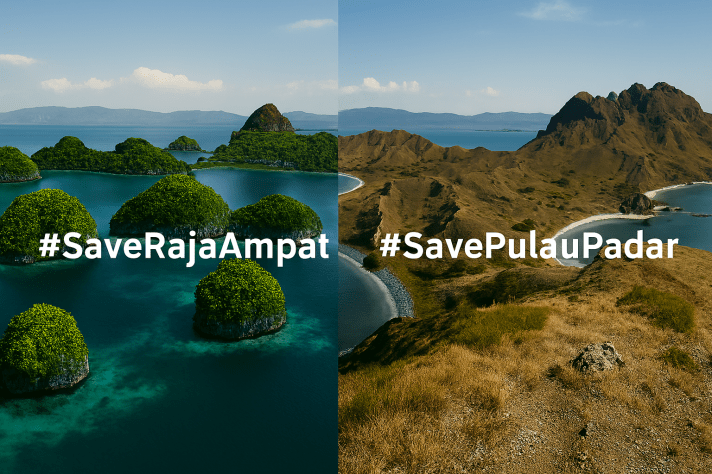
AI-generated picture

From #SaveRajaAmpat to #SavePulauPadar

Month after month, year after year, Indonesia’s netizens find themselves fighting to protect their own “heaven on earth”. Not long ago, the hashtag #SaveRajaAmpat went viral. Raja Ampat, located in the eastern province of Papua, is renowned for its pristine natural beauty, blue waters, untouched coral reefs, and hundreds of small islands. But even this ecological treasure isn’t safe. The culprit? Nickel mining, specifically on Gag Island.

Nickel has become a highly sought-after resource, particularly with the rapid growth of electric vehicles. The world’s push for green energy, while well-intentioned, has ironically fuelled environmentally destructive practices in the Global South. Countries in the Global North enjoy sleek, battery-powered cars, often unaware or uninterested that the nickel powering their green lifestyle is extracted at the cost of ecosystems and communities thousands of miles away. As someone from Indonesia currently living in a country that prides itself on green innovation, I feel a deep sense of unease knowing Indonesia pays the price for that convenience.

Today, a new hashtag popped up on my Instagram feed: #SavePulauPadar.

Pulau Padar is situated between the Komodo and Rinca islands, within the Komodo National Park, a UNESCO World Heritage site. This region is globally celebrated for its stunning landscapes and, of course, its legendary Komodo dragons. But now, Pulau Padar is under threat. The Indonesian government has granted a 274-hectare concession to a company called PT Komodo Wildlife Ecotourism (KWE), which plans to build a staggering 619 structures, including 448 swimming pools, 15 cafés, 7 spa facilities, and various other developments.

For whom is this “eco-tourism” development intended? Mostly, the wealthy, especially international tourists from the Global North. These projects often cater to global luxury standards, offering the comforts of home in an exotic setting, all while displacing the very communities that call these islands home. Indigenous people whose lifestyles and needs are often disregarded now face the possibility of forced relocation in favour of luxury resorts.

It begs the question: why must international tourists and rich people expect their own standards of living wherever they go? Isn’t the essence of travel rooted in experiencing different cultures, ways of life, and environments? Why can’t they adapt to the local standard?

Unfortunately, this is a pattern we have seen time and time again. In our relentless pursuit of “development”, we equate progress with imitation, copying the lifestyles, infrastructures, and economies of wealthier nations. But at what cost? When we build for others while displacing our own people, when we destroy what makes a place special to make it more palatable, are we really developing or just giving up what matters most?

Development must be redefined.
It should not mean sacrificing local identity for international approval, nor should it mean choosing short-term profit over long-term sustainability. True development uplifts communities, preserves nature, and respects the balance between people and place. (Meta Mulyani)
Reducing Village Corruption Would Help Farmers Cope with Climate Change in Central Java, Indonesia

In 2022, Indonesian Corruption Watch (ICW) reported 579 cases of corruption nationally, with 155 occurring at the village level. By 2023, the number of cases nationally had increased to 791, with 187 cases involving Village Heads (Kepala Desa) or the Village Apparatus (Perangkat Desa). Additionally, the Indonesian Central Bureau of Statistics (BPS) released its Anti-Corruption Behaviour Index (ACBI) in 2024, revealing that urban communities have a better score than their rural counterparts.

To prevent corruption and promote anti-corruption values at the village level, Indonesia’s Corruption Eradication Commission (KPK) launched an initiative called Desa Antikorupsi (Anti-Corruption Village) in 2021. The main components of this program include:

  1. Education and Awareness: Spreading the importance of integrity and anti-corruption values among village governments and communities;
  2. Improving Governance: Enhancing integrity of village governance by adhering to guidelines outlined in the Anti-Corruption Village Handbook;
  3. Community Participation: Encouraging active participation from all community members, including religious leaders, youth, and women, in preventing and combating corruption.

The program consists of various phases such as technical guidance, observation, and evaluation to ensure villages meet the criteria to become Anti-Corruption Villages.

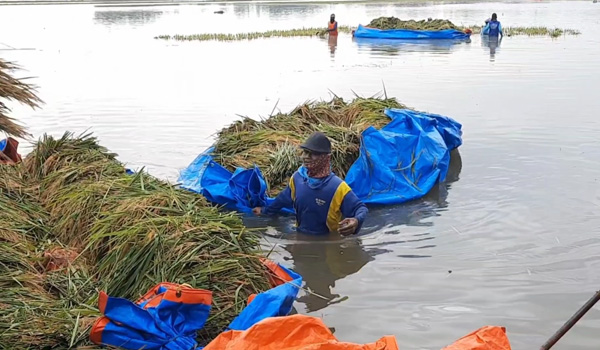
During fieldwork in 2023 on the experiences of smallholder farmers in Central Java when dealing with climate change, however, I found that corruption cases still abound in villages in this part of Indonesia. As I explored the psychological stressors farmers face from climate change and the resources they use to cope with these stressors, almost all interviewees expressed distrust towards the state, with corruption mentioned not only as an irritation but as a hindrance to, for example, recovery from crop failure. Three corruption-related experiences were highlighted by interviewees:

Irregularities in Social Protection Assistance

One interviewee was frustrated that many in his neighbourhood received cash as social protection assistance, but that he had not. He checked this matter with the Social Department and found that his name was indeed on the list of supposed recipients. Yet, the Village Head and Village Apparatus denied knowing about this. The interviewee did not report this case. Instead, he accepted it, though it made him upset.

Uneven benefits in the Agriculture Insurance Programme

The government introduced an agriculture insurance program to help farmers cope with crop failures. However, many farmers rely on the Village Apparatus to sign up and file claims due to a lack of knowledge or reluctance to deal with administrative work. Following a flood, some participants received benefits, but suspicions arose regarding the varying amounts provided. One participant claimed village officers illegally took a portion of their benefit, highlighting a common practice that often goes unreported.

Illegal Levies to Attain Recommendation Letter to Buy Fuel

The government issued regulations in 2021 to reduce carbon emissions and optimize fuel distribution. If people wanted to buy subsidized fuel, they had to apply for a Letter of Recommendation to do so. This involved submitting many documents at the village and district levels. This bureaucracy frustrated farmers and was misused by some public officials who issued illegal levies.

My research shows that reducing village corruption would help farmers cope with at least some of the stressors they face from climate change in Central Java. Establishing public services at the village and district levels are important for climate change preparedness and amelioration in rural areas. But given the prevalence of village corruption in Indonesia, it is vital that these public services are accompanied by information campaigns that sensitize communities as to their entitlements.

Improving the role of Village Deliberation Agencies (BPD) is also crucial to tackle corruption at the village level. As outlined in Law no. 6/2014 on Villages, the BPD is responsible for representing the aspirations of village communities and overseeing the performance of the Village Head. However, my research shows that many BPD members do not fully understand their roles and exist as a rubber-stamp. There is a need to optimize the BPD’s role, particularly in terms of monitoring, evaluating, and reporting on the Village Head’s performance, but also in terms of supervising policy implementation.

Finally, eliminating money politics from village elections and the selection of village officials would be an important step forward. Money politics is not a new phenomenon, and candidates often compete by offering money, referred to as ‘pocket money’, as a form of compensation for voters’ support. Instead of focusing on their vision, mission, and workplan to improve the community, candidates are instead focused on buying votes. As a result, and as show in cases investigated by the KPK, elected candidates may then misuse village funds to repay the money spent during the election. (Meta Mulyani)